Friday, July 26, 2013

Refined Olive Oil vs. Quality Extra Virgin Olive Oil in Desserts & Cooking

Those with a limited scope of experience and or access to quality extra virgin olive oil typically make broad and therefore ignorant statements.  Often, these statements can come from individuals who maintain high visibility and are " industry professionals", cookbook authors, or chefs.  These are often the same folk who champion the tired mantra that extra virgin olive oil can never be heated or cooked with.   

The fact remains that delicate, or what we refer to as “sweet” extra virgin olive oil can and should be used in dessert recipes designed to contain olive oil and in some cases can even replace other types of fats.  There are even some instances where a throaty, robust extra virgin olive oil might be selected for a particular dessert recipe to great effect.  Choosing the right extra virgin olive oil for any given olive oil-based dessert is made easier when there is a broad selection of premium quality extra virgin olive oil to choose from.  The flavor and intensity range offered by such selection will help identify the right EVOO for a particular application.  Those without access to such a selection, or who are faced with an overabundance of poor quality extra virgin may choose or default to using flavorless, odorless refined olive oil as a stand in.  After all, the typical defects of rancidity and fustiness found in most supermarket and retail products labeled as extra virgin olive oil tend to be more pronounced when used in delicate desserts.     

However, if a flavorless, odorless refined fat such as "pure" or refined olive oil is called for in any culinary application, it begs the pragmatic question, why not just opt for a much less costly refined oil that is similarly flavorless and odorless?  In fact, I challenge the reasoning behind using pure olive oil in any culinary capacity, as I can list several other refined vegetable/seed oils that outperform it where health benefit, cost, and functionality are concerned.  It is common knowledge that in the refining process, olive oil is stripped of the basic characteristics (flavor, aroma, and nutrients) which are precisely what are extolled in good quality extra virgin olive oil.  And in a side by side blind taste test between refined olive oil, corn, soy, or canola oil, it would be hard to differentiate the "pure" refined olive oil from the others. 

Furthermore, refined olive oil contributes the same amount of calories tablespoon by tablespoon as canola, peanut, safflower, or soybean oil etc. without contributing precious antioxidants.  So, to summarize, if we are looking to cook or bake, be it a sweet or savory application, and want no flavor or antioxidants to be imparted from the oil we're using, then we should look to lower cost safflower, sunflower, rice bran, or grape seed oil – not costly refined olive oil.   If we are looking for flavor and health benefit, then extra virgin olive oil should be used exclusively.

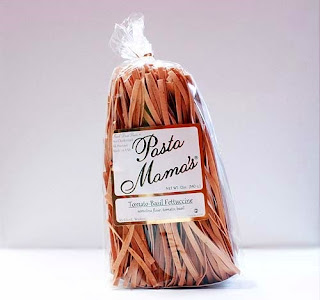
Superlative, Amazing, Pasta Mama's Pastas

From Delizia Oil &Vinegar


As many of you know, I am a stickler for pasta quality.  Go through the blog now and see just how many pasta recipes I've developed if you're not sure.
I grew up watching my Italian grandmother hand rolling her pasta on the kitchen table.  The sheets were paper thin, and the pasta was magnificent.  So when Paul Santillie of Pasta Mama's sent me a box of his eye-catching dried pasta, I must admit that I was dubious.  I hand roll fresh pasta more frequently than I reach for the dried stuff.  That being said, we here at Veronica Foods have learned to keep an open mind, when receiving samples of new products.  You never know when you're in for a surprise.
Needless to say, after testing out dozens of Paul & Diane's amazing pastas, I was a convert.  My family, aka my guinea pigs, had also fallen deeply in love with the vibrant flavors and distinct fresh-like texture of Pasta Mama's artisan line.  It wouldn't be an exaggeration to say that we've been approached by dozens upon dozens of pasta manufacturers over the years looking for such an endorsement.  However, it's not been until now that we felt a dried pasta worthy of such praise. 
 
A wide variety of Pasta Mama's pastas are sold at D'Olivo.  Come in or shop online for your favorite pasta flavor and sauces. 


Tuesday, June 18, 2013

The Freshest Olive Oil in the World Has Arrived at D'Olivo

Organic Picual

Crush Date:  March 2013
A super-early harvest Picual and study in green-fruitiness,
this EVOO boasts aromatic notes of herbaceous parsley and unripe stone fruit on the bouquet.  The finish is extremely throaty with lingering pepper, and only moderate, fleeting pungency.  This remarkable extra virgin olive oil won a highly coveted “Best of Class” award at the 2013 New York Olive Oil Competition.  

            *Polyphenols: 438                                 *FFA: 0.2
*Oleic Acid: 74.8                        *Peroxide: 4.4
                              *DAGs:  98.6                            *PPP: <1.0
Organoleptic Taste Panel Assessment:
Fruitiness: 6.0  Bitterness: 5.5  Pungency: 5
*As measured at the time of crush.
Country of Origin:  Peru

Organic Barnea

Crush Date:  March 2013
A super-early harvest Barnea with a strong herbaceous aroma and flavor.  Herbal notes of freshly crushed parsley and fennel dominate the bouquet.  The finish is VERY peppery with commanding pungency.  This remarkable extra virgin olive oil won a highly coveted Gold Medal at the 2013 New York Olive Oil Competition.  
*Polyphenols: 507                      *FFA: 0.2
*Oleic Acid: 66.8                       *Peroxide: 5
                                               *DAGs:  98.6                    *PPP: <1.0
Organoleptic Taste Panel Assessment:
Fruitiness: 5.8  Bitterness: 5.5  Pungency: 5
*As measured at the time of crush.
Country of Origin:  Peru

article courtesy of:  Veronica Foods

Refined Olive Oil vs. Quality EVOO in Deserts & Cooking

Those with a limited scope of experience and or access to quality extra virgin olive oil typically make broad and therefore ignorant statements.  Often, these statements can come from individuals who maintain high visibility and are " industry professionals", cookbook authors, or chefs.  These are often the same folk who champion the tired mantra that extra virgin olive oil can never be heated or cooked with.  

The fact remains that delicate, or what we refer to as “sweet” extra virgin olive oil can and should be used in dessert recipes designed to contain olive oil and in some cases can even replace other types of fats.  There are even some instances where a throaty, robust extra virgin olive oil might be selected for a particular dessert recipe to great effect.  Choosing the right extra virgin olive oil for any given olive oil-based dessert is made easier when there is a broad selection of premium quality extra virgin olive oil to choose from.  The flavor and intensity range offered by such selection will help identify the right EVOO for a particular application.  Those without access to such a selection, or who are faced with an overabundance of poor quality extra virgin may choose or default to using flavorless, odorless refined olive oil as a stand in.  After all, the typical defects of rancidity and fustiness found in most supermarket and retail products labeled as extra virgin olive oil tend to be more pronounced when used in delicate desserts.    

However, if a flavorless, odorless refined fat such as "pure" or refined olive oil is called for in any culinary application, it begs the pragmatic question, why not just opt for a much less costly refined oil that is similarly flavorless and odorless?  In fact, I challenge the reasoning behind using pure olive oil in any culinary capacity, as I can list several other refined vegetable/seed oils that outperform it where health benefit, cost, and functionality are concerned.  It is common knowledge that in the refining process, olive oil is stripped of the basic characteristics (flavor, aroma, and nutrients) which are precisely what are extolled in good quality extra virgin olive oil.  And in a side by side blind taste test between refined olive oil, corn, soy, or canola oil, it would be hard to differentiate the "pure" refined olive oil from the others.

Furthermore, refined olive oil contributes the same amount of calories tablespoon by tablespoon as canola, peanut, safflower, or soybean oil etc. without contributing precious antioxidants.  So, to summarize, if we are looking to cook or bake, be it a sweet or savory application, and want no flavor or antioxidants to be imparted from the oil we're using, then we should look to lower cost safflower, sunflower, rice bran, or grape seed oil – not costly refined olive oil.   If we are looking for flavor and health benefit, then extra virgin olive oil should be used exclusively.

Monday, June 17, 2013

Oleo Estapa Olive Oil Wins Most Prestigious Award

OLEO ESTEPA WINS 1ST IN THE MOST PRESTIGIOUS COMPETITION IN THE WORLD... AND NO, IT'S NOT THE N.Y. OLIVE OIL COMP!

The N.Y. Olive Oil Competition calls itself the most definitive olive oil competition in the world... in the first year of its inception, and actually before it even held its first competition.  However, there are far, far more illustrious competitions in the world such as the Mario Solinas.  Winning First Place in this competition is something very, very special.

You can find this award winning olive oil at D'Olivo.

-Article courtesy of Veronica Foods

Monday, May 20, 2013

Olive Oil May Help You Eat Less


Courtesy Article: Olive Oil Times 


Olive oil is known for many of its health benefits, but new research shows that it may even help in weight loss. A study from the Technical University of Munich showed that fats in general, but olive oil in particular, increases feelings of fullness which may result in consuming less calories overall.

Fat is necessary in the diet not only for its essential fatty acids and for the absorption of fat soluble vitamins, but also to produce feelings of satiety. This is one of the reasons many individuals have a difficult time adhering to low fat diets as they may not feel full, so they eat more carbohydrates or other foods in order to compensate.

Work groups at the Technical University of Munich (TUM) and the University of Vienna studied four different fats and oils: Lard, butterfat, rapeseed oil (canola) and olive oil. Participants received 500 grams (18 ounces) of low-fat yoghurt enriched with one of the four fats or oils every day as a supplement to their normal diet for a period of 3 months.

According to Prof. Peter Schieberle, Head of the TUM Chair of Food Chemistry and Director of the German Research Center for Food Chemistry, olive oil had the biggest satiety effect. “The olive oil group showed a higher concentration of the satiety hormone serotonin in their blood and these participants also reported that they found the olive oil yogurt very filling,” Schieberle said. During the study period, no member of the olive oil group gained weight or saw an increase in their body fat percentage.

The researchers believe that the aroma compounds of the olive oil may play a role and focused on that in the second part of the study. Participants were either given one yogurt with olive oil aroma extracts or plain yogurt. The olive oil group’s calorie intake remained the same, but the control group had been consuming 176 extra calories a day even though both yogurts had the same calories. It was noted in the study that the olive oil aroma group adapted their eating habits – but the control group participants were not able to do the same and they also found that in comparison to the aroma group, the control group had less of the satiety hormone serotonin in their blood.

This is not the first time satiety and olive oil have been studied. A University of California study had shown that oleic acid (a fatty acid abundant in olive oil), may prolong feelings of fullness between meals. Any type of fat provides satiety, however it appears that olive oil due to a number of factors may be more effective, and with its additional health benefits it can be the ideal fat to be used in the diet. It is important to note though that while olive oil may make you feel full longer, it needs to be used judiciously in order to achieve a balanced calorie intake.

How Extra Virgin Olive Oil Can Protect from Alzheimer’s Disease

By Elena Paravantes
Olive Oil Times Health Editor

Olive oil has been associated with protection against cognitive decline that comes with aging, and studies have shown that the Mediterranean diet may reduce the risk of Alzheimer’s disease and that the monounsaturated fat in olive oil was mainly responsible for this effect.

Now studies are now showing that it is in fact oleocanthal, a natural compound found in extra virgin olive oil that has antioxidant and antinflammatory action that may have the protective effect.
In Alzheimer’s disease, it is believed that damage to the brain starts when deposits of beta-amyloid protein (Aβ) form plaques in the brain eventually disrupting nerve cell function and leading to the death of these neurons.

In this new study, researchers from the University of Louisiana examined the effect of oleocanthal on the abnormal protein.  By looking at the action of oleocanthal in cultured cells, but also the brains of laboratory animals they found that this olive oil phenol was promoting the production of two other proteins that are believed to play an important role in removing Aβ from the brain.
In their study that was published in Chemical Neuroscience, the researchers concluded that extra-virgin olive oil-derived oleocanthal associated with the consumption of Mediterranean diet has the potential to reduce the risk of Alzheimer’s Disease or related neurodegenerative dementias.